
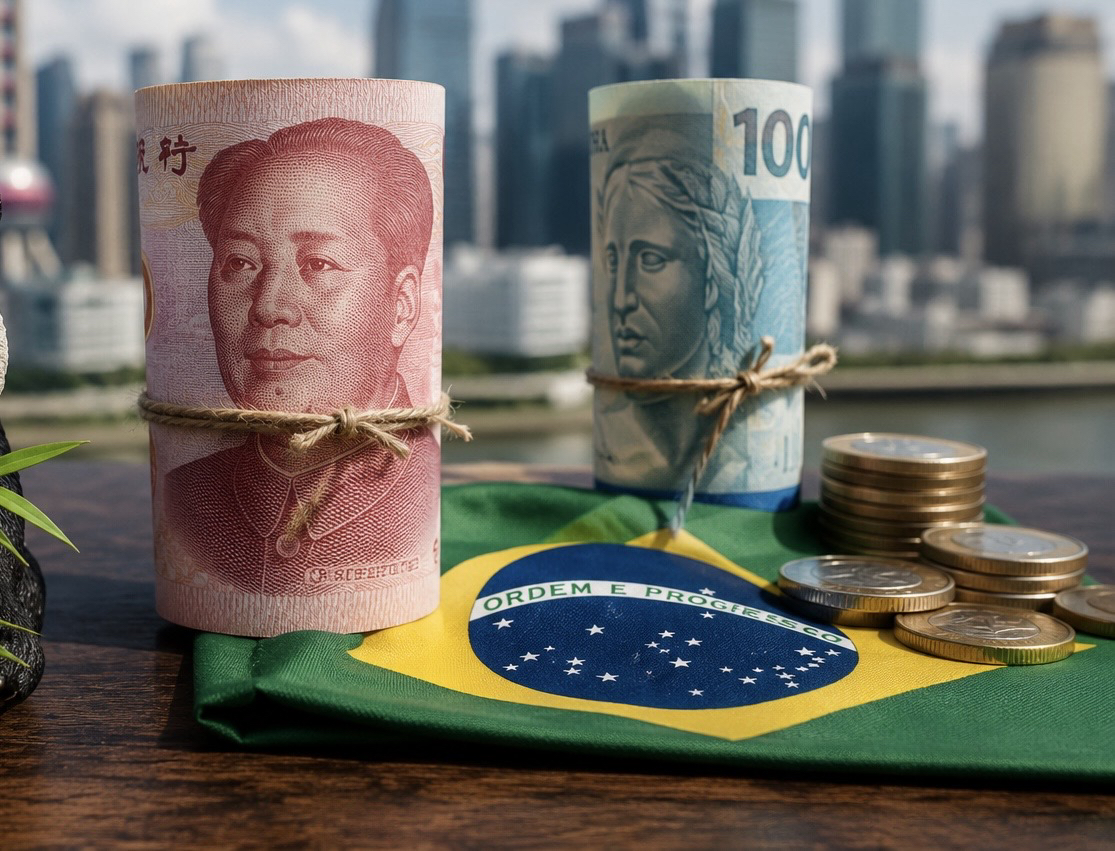
By Brazil Stock Guide – Brazil’s planned debut in China’s domestic bond market is designed to open a new yuan funding route for Brazilian companies with exposure to the world’s second-largest economy, turning a modest sovereign issuance into a test case for corporate access to Chinese capital.
The country plans to raise up to 5 billion yuan, or about $735 million, through its first-ever issuance of panda bonds, Finance Ministry official Dario Durigan told Reuters in Beijing. If completed, the transaction would mark the largest debut by a foreign sovereign issuer in China’s yuan-denominated domestic debt market.
Panda bonds are debt securities issued in China’s domestic market by foreign borrowers and denominated in yuan. For Beijing, they are part of a broader effort to internationalize the Chinese currency. For Brazil, the planned deal is a market-access test: a way to create a sovereign benchmark that could later help Brazilian companies raise private debt in yuan.
“We need to test and to start doing the trajectory of sovereign debt of Brazil in China,” Durigan told Reuters after a meeting with People’s Bank of China Governor Pan Gongsheng. He said he hoped the bonds would be issued within the next two to three months.
The transaction would place Brazil among a small but growing group of sovereign borrowers tapping China’s onshore debt market. Pakistan, Kazakhstan, Slovenia and Hungary have all issued in China over the past year, attracted by relatively low yuan borrowing costs and Beijing’s push to expand the currency’s role in global finance.
Brazil’s planned deal would also follow its return to the euro market earlier this year and its recent dollar issuance, giving investors a useful comparison across funding currencies.

The comparison is not straightforward. Dollar and euro bonds provide deep liquidity and established benchmarks, while yuan funding may offer lower nominal borrowing costs but comes with capital controls, lower liquidity and hedging questions. The relevant test will not be the headline coupon on Brazil’s first panda bond, but the all-in cost after currency hedging and regulatory frictions.
That is why the corporate angle may be the most important part of the story.
Durigan said Brazilian companies had asked the government to begin issuing yuan-denominated debt to help them eventually raise funds through private panda bond deals and reduce exposure to exchange-rate volatility. He added that he had discussed the plan with miner Vale and electrical equipment maker WEG.
That does not mean Vale or WEG are preparing their own panda bond deals. The point is that both are examples of Brazilian companies with international operations and economic links to China that could, in time, benefit from a local yuan funding channel if the sovereign transaction helps open the market.
Vale has one of the deepest commercial relationships with China among Brazilian companies, given the country’s role as the dominant buyer of iron ore. WEG, meanwhile, is a global industrial manufacturer with exposure to electrical equipment, automation, motors and energy systems, areas where China can be both a market and part of the supply chain.

There is already a Brazilian corporate precedent. Suzano became the first non-financial corporation from the Americas to issue panda bonds in China, raising RMB 1.2 billion in 2024 through a green bond. The company later returned to the market with a RMB 1.4 billion dual-tranche panda bond issuance, showing that yuan funding can be viable for Brazilian companies with scale, international investor recognition and a clear China-linked financing story.
The Suzano case matters because it shows the panda market is not only symbolic. It can be a practical source of funding when the issuer has a strong credit profile and a use of proceeds that fits Chinese investor demand. In Suzano’s case, the transaction was tied to green finance and the funding of certified eucalyptus plantations.
A sovereign issuance could broaden that path. Without a Brazilian sovereign reference, Chinese investors may find it harder to price Brazilian corporate risk. With one, companies could eventually compare the cost of yuan funding with dollar, euro or local-currency alternatives.
The appeal is clear but limited. Yuan debt may offer lower nominal borrowing costs, but China’s currency still operates under tight capital controls and remains less liquid than the dollar or the euro. For Brazilian companies, yuan funding only makes sense if it can be matched with revenues, costs, suppliers or investment projects linked to China, or if hedging costs do not erase the advantage.
Durigan framed the move as part of a broader multilateral approach, rather than a challenge to the dollar. He said there was no development on proposals for a common BRICS currency, while arguing that it was natural for other currencies to expand their role in global finance.
For Beijing, panda bonds are part of a long-running effort to internationalize the yuan. For Brazil, the transaction is a relatively small sovereign financing exercise with a potentially larger strategic purpose: creating a bridge between Brazilian corporates and China’s domestic capital market. The first deal will not change Brazil’s funding profile. But if it works, it could give companies such as Vale, WEG and other China-facing Brazilian groups another currency shelf to consider.


Leave a Reply