
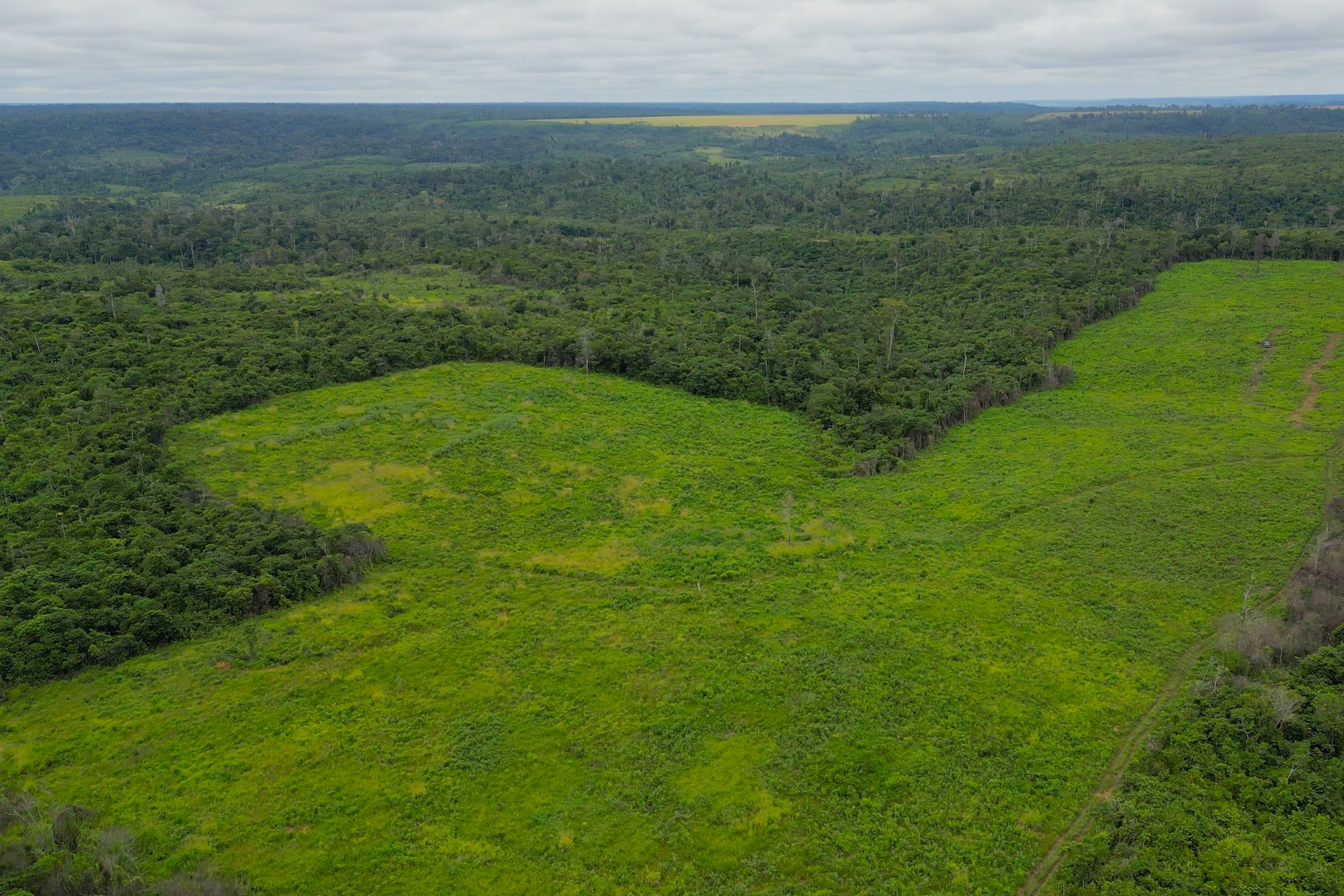
By Brazil Stock Guide – The Banco Nacional de Desenvolvimento Econômico e Social (BNDES) announced on Friday (Oct. 10) a R$360 million green-finance package, consolidating its leadership in ecological restoration and regenerative bioeconomy — just one month before Brazil hosts COP30 in Belém, where forest finance and inclusion are expected to dominate the agenda.
The operations — involving Suzano (B3: SUZB3), Belterra Agroflorestas, and Fundação Bunge/Agrícola Alvorada — were unveiled during the event “BNDES Florestas do Brasil por Todo o Planeta” in Rio de Janeiro, attended by BNDES president Aloizio Mercadante.
The announcement also marked the official launch of BNDES Florestas — a new umbrella platform that organizes and scales the bank’s initiatives in forest restoration, bioeconomy and nature-based climate solutions. The platform consolidates projects financed by the revamped Climate Fund and expands the Floresta Viva initiative, creating Brazil’s most comprehensive public-finance architecture for reforestation.
“BNDES is turning forest restoration into a driver of sustainable development, combining credit, innovation and social inclusion,” said Mercadante. “These projects show that Brazil can lead the global green economy with scale, science and biodiversity.”

The Executive Secretary of the Ministry of Environment and Climate Change, João Paulo Capobianco; the President of BNDES, Aloizio Mercadante; the Executive Vice President of Sustainability, Communication and Brand at Suzano, Malu Paiva; the BNDES Director of Social and Environmental Affairs, Tereza Campello; and the BNDES Planning Director, Nelson Barbosa.
Suzano: the largest native-forest restoration financed by the Climate Fund
BNDES approved R$250 million for Suzano to restore 24,300 hectares across the Cerrado, Atlantic Forest and Amazon biomes, spanning São Paulo, Espírito Santo, Bahia, Maranhão, Pará and Mato Grosso do Sul.
The project will benefit over 1,000 rural properties, 60 percent of them belonging to third parties, and is expected to capture 228,000 tons of CO₂ per year, while creating jobs, training rural workers and building ecological corridors.
“This financing supports Suzano’s goal to connect 500,000 hectares of native vegetation by 2030,” said Malu Paiva, Suzano’s VP for Sustainability. “It integrates conservation, genetic research and forest innovation.”
Belterra: scaling productive restoration through agroforestry
Belterra Agroflorestas received R$100 million from the Climate Fund for Brazil’s first large-scale productive restoration project, deploying agroforestry systems (SAFs) in Bahia, Pará, Rondônia and Mato Grosso.
The model integrates cocoa, banana and cassava, balancing short- and long-cycle crops to ensure income and long-term sustainability for small and medium producers.
The project will plant 2.9 million seedlings and includes R$15 million in Belterra equity plus R$20 million from the Amazon Biodiversity Fund (ABF), managed by Impact Earth in collaboration with USAID and CIAT.
It is expected to reduce 232,500 tons of CO₂ annually, generating carbon credits and boosting the market for regenerative cocoa exports.
“This operation unites credit, innovation and inclusion to turn degraded land into hubs of forest and food,” said Mercadante. “It’s a replicable model of tropical regenerative agriculture,” added Valmir Ortega, Belterra’s CEO.
Floresta Viva: restoration in indigenous territories
BNDES also launched the 13th call of the Floresta Viva program, allocating R$10 million in non-reimbursable funds to restore forests across 61 indigenous territories in Mato Grosso, Tocantins and Maranhão.
The initiative, a partnership between BNDES (50 percent), Fundação Bunge (40 percent) and Agrícola Alvorada (10 percent), is part of the Arco da Restauração, a joint effort by BNDES and the MMA to create a green belt linking the Amazon and Cerrado biomes.
Projects will include sustainable agroforestry systems, family-farming support, and carbon certification, managed by Funbio. The areas were selected for hosting half of Brazil’s indigenous firefighting brigades.
“This program strengthens conservation in the Amazon–Cerrado transition zone, crucial for water regulation and climate balance,” said Mercadante. “It’s a decisive step toward a low-carbon and inclusive rural economy.”
Rossano de Angelis Jr., country manager at Bunge Brazil, said the partnership “amplifies the impact of regenerative practices across the supply chain,” while Leandro Wendt, CFO of Agrícola Alvorada, emphasized “a balanced, sustainable approach to modern agribusiness.”
Climate Fund reaches R$3.4 billion and readies new green-equity front
With these new operations, BNDES Florestas has now mobilized R$3.4 billion for ecological restoration, bioeconomy and climate innovation projects. The bank is preparing to launch R$10 billion in green-equity funds, targeting bioinputs, environmental technology and nature-based solutions, expected to leverage up to R$20 billion in private capital.
Upcoming initiatives include a national carbon-certification entity and the use of artificial intelligence for biodiversity mapping, in partnership with universities and research institutions.
The announcement reinforces Brazil’s positioning ahead of COP30, where the government plans to showcase its forest-finance framework and attract new partnerships for large-scale ecological restoration in the Amazon basin.
“Brazil has unique conditions to lead the global green economy — with biodiversity, renewable energy and technological capacity,” said Mercadante.



Leave a Reply