
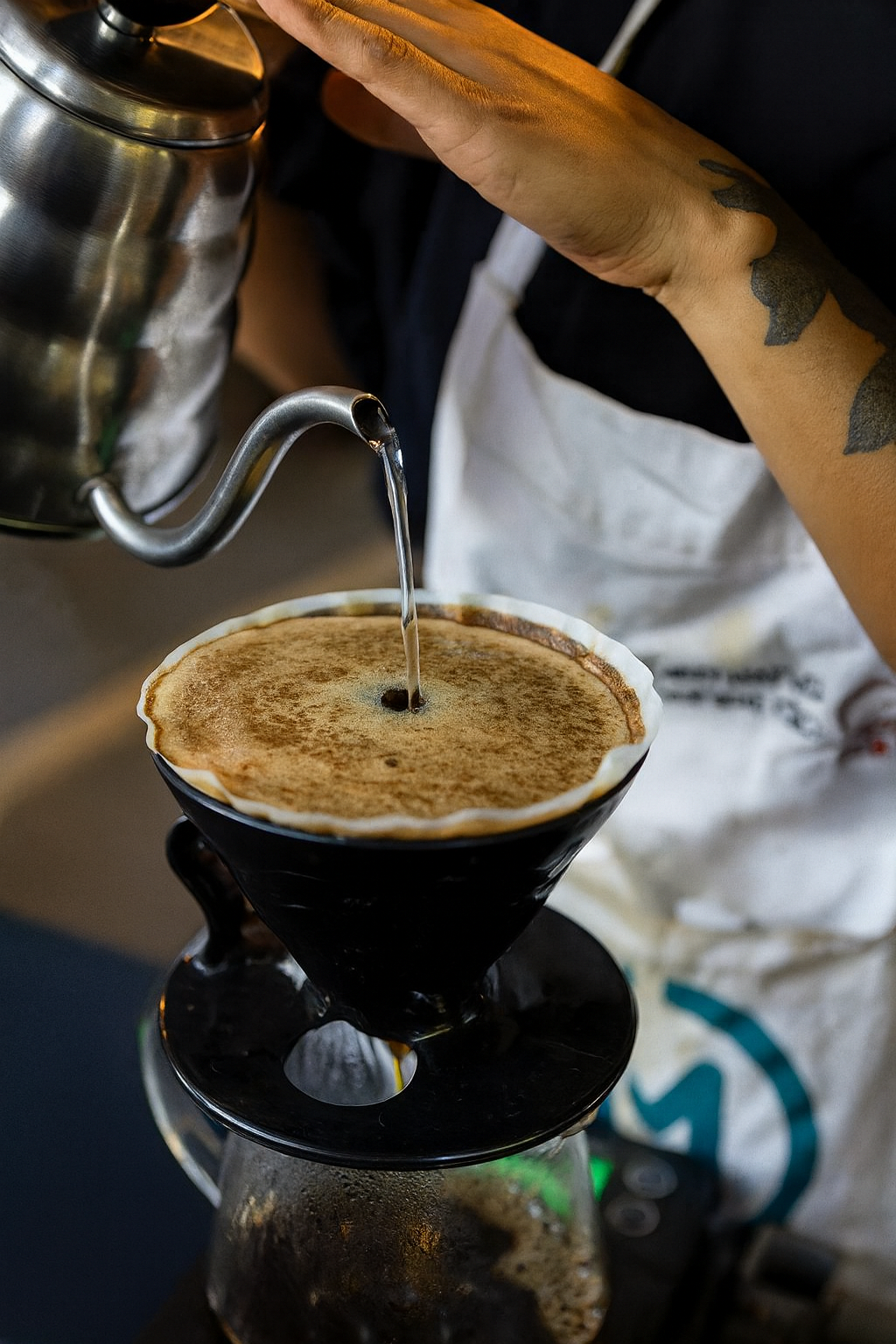
In Belo Horizonte, the bar capital of Brazil, cafés are drawing a new generation.
By Rodrigo Uchoa, special for Brazil Stock Guide
Belo Horizonte, capital of Minas Gerais, has long boasted a dubious distinction: more bars per head than any other Brazilian city. With over 4,100 botecos—unpretentious watering holes serving cold beer and salty snacks—locals have long prided themselves on their title of Brazil’s “capital of bars.” Yet wander the leafy neighbourhoods today and another kind of establishment is multiplying just as quickly: sleek coffee houses serving single-origin espressos and pour-overs. The city of beer and cachaça is quietly becoming a city of beans.
This shift is not merely cultural whimsy. Coffee is one of Brazil’s biggest agricultural export, and Minas Gerais, the state of which Belo Horizonte is capital, produces nearly 25 million 60-kg bags a year—close to 40% of the national crop. But tariffs imposed by Donald Trump on Brazilian imports—50% in the case of coffee—have battered exporters, especially those dealing in specialty beans. In August, Brazilian shipments of high-end coffee to the US collapsed by almost 80% compared with a year earlier. Contracts were postponed, margins evaporated, and farmers suddenly faced a sobering question: if not New York, then where?
The answer, increasingly, may be São Paulo, Rio de Janeiro, and Belo Horizonte itself. Although the bulk of Brazil’s 66 million bags still head abroad, a sliver of the harvest is finding enthusiastic consumers at home. Roughly one in ten cups now drunk domestically qualifies as “specialty coffee.” That share remains modest, but it is growing fast. Younger Brazilians, more health-conscious and less devoted to alcohol, are flocking to cafés. Laptop-friendly spaces with latte art and beans from the Mantiqueira mountains are replacing some of the daytime trade once dominated by bars.
Specialty coffee differs sharply from the dark, bitter brews that long dominated Brazilian households. The beans are meticulously selected, often from small lots grown at altitude and harvested by hand. Roasters favour lighter profiles that showcase the bean’s intrinsic flavours rather than masking them with carbonised notes. In the Cerrado Mineiro, coffees are prized for nutty, chocolatey sweetness; in the Serra da Mantiqueira, delicate acidity and floral aromas predominate; in the Matas de Minas, fruitier notes and syrupy body stand out. Baristas weigh, grind and brew with scientific precision; customers are encouraged to savour, not gulp. What was once merely a caffeine fix has become closer to a wine-like ritual of terroir and tasting notes.

Amid aromas and smiles, Café em Festa turns the simple act of brewing coffee into a collective ritual of culture and connection.
The irony is rich: in a city synonymous with beer, festivals devoted to coffee are drawing crowds of thousands. Recent editions of “Café em Festa” and “Tomei Gosto por Café” offered tastings from multiple producing regions of Minas, with local roasters and farmers mingling with hipster baristas. The events are free, lively and packed with twenty-somethings who might once have met friends over a chopp but now compare notes on fruity acidity versus chocolatey body.
For growers, the trend is more than cultural colour. Specialty coffee requires painstaking cultivation and earns higher premiums—at least in theory. With the American market hobbled by tariffs, domestic demand offers a welcome buffer. Multinationals have noticed too: Nestlé recently pledged over 1.5 billion reais to expand its Brazilian coffee business, with a focus on Minas and on “out-of-home” consumption. Local entrepreneurs are doing their part, turning roasted beans into a lifestyle product.
Challenges abound. Inflation and stagnant wages could limit how much Brazilians are willing to pay for premium cappuccinos. Scaling up without sacrificing quality remains tricky for small farms. And while the US market may be weak, Europe and Asia still beckon—meaning the domestic boom is more complement than substitute. Yet the symbolic importance is hard to miss. Coffee, once treated at home as a cheap morning fuel, is becoming a drink of leisure, identity and pride.
Belo Horizonte may never lose its crown as Brazil’s bar capital. But the number of coffee shops now rivals that of its legendary botecos, at least in the imagination of its youth. If tariffs abroad persist, the city’s evolving taste may help turn a trade headache into a cultural opportunity.




Leave a Reply