


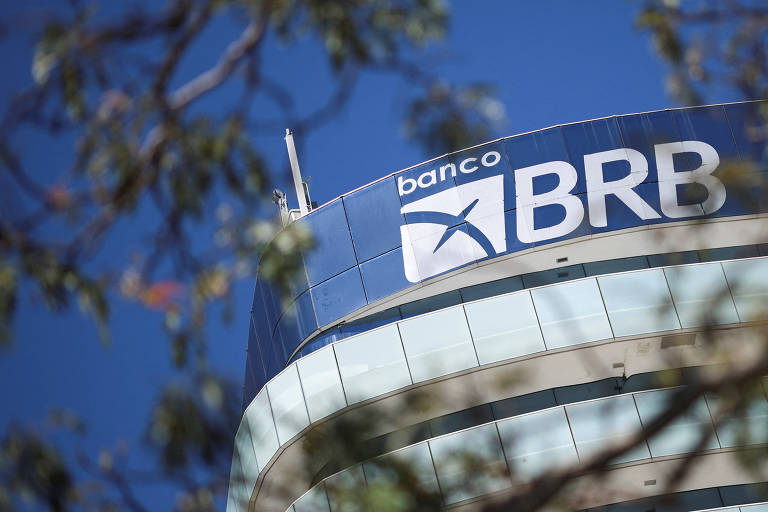
The saga of the Federal District government to plug a R$2.6 billion capital hole at Banco de Brasília (BRB) after a bad deal with Banco Master is a rare case of a banking crisis that may be resolved through balance-sheet engineering — rather than cash. Pressured to rebuild capital after prudential demands from Brazil’s Banco Central, the lender turned to its sole shareholder. That shareholder is weighing a response based on real assets.
The chosen instrument is Terracap, the Federal District’s real-estate holding company — the Federal District being Brazil’s capital and a city-state with no municipalities of its own. Created in the early 1970s out of Novacap, the state builder that delivered Brasília, Terracap was set up to manage and dispose of public land accumulated when the capital was built on federally expropriated terrain. It now oversees one of the country’s largest urban land banks. Unlike other states, the local government never relinquished control over vast swathes of urban land, including entire blocks in prime areas of the Plano Piloto. This land has long functioned as the District’s savings account.
Injecting land into BRB’s equity would convert that savings account into regulatory capital. Technically, it works: it boosts capital ratios, meets regulatory requirements and avoids louder options, such as a direct cash injection or reliance on liquidity lines from the Fundo Garantidor de Crédito. The cost, however, does not vanish — it remains with the government. Risk is removed from the bank’s balance sheet and repositioned onto public assets.
There is also a convenient side effect. The operation is likely to invite speculation — whether real-estate, by repricing public land that will require valuation and eventual monetisation, or financial, by keeping BRB “tidy” for the future, including scenarios of corporate restructuring or a potential sale. It is worth recalling that in the 1990s, when state-owned banks collapsed under poor deals and weak governance, BRB was spared for posing no systemic risk and for fulfilling a clearly defined local role. The logic of preservation has resurfaced — albeit through a different instrument.
Politically, the move is even more revealing. Governor Ibaneis Rocha chose to bring the problem onto his own government’s balance sheet, using public assets to absorb a risk-allocation failure at the state lender. It is a pragmatic — and curious — choice. The irony is hard to miss. A governor who once endorsed Dilma Rousseff’s impeachment over fiscal “pedaladas” — accounting manoeuvres that delayed government payments to mask budget deficits — is now pulling a banking problem firmly onto his own balance sheet.





Leave a Reply