

When Sabesp told the market on Wednesday the 21st that it had concluded the transaction to acquire a significant stake in EMAE, it quietly closed one of the most revealing chapters of São Paulo’s recent privatization cycle. The price — R$682.6 million for 29.79% of capital — did more than reshuffle control. It rewrote the valuation of an asset that, just over a year earlier, had been sold with heavy political symbolism.
The arithmetic is straightforward. In 2024, the Phoenix Fund paid R$1.04 billion for roughly 40% of EMAE, implying close to R$26 million per percentage point of capital. Sabesp entered at about R$22.9 million per point — an implicit 12% discount. The hydropower plants, dams and ferry operations did not materially deteriorate in that interval. What disappeared was the political premium embedded in the first flagship privatization of Governor Tarcísio de Freitas’ administration.
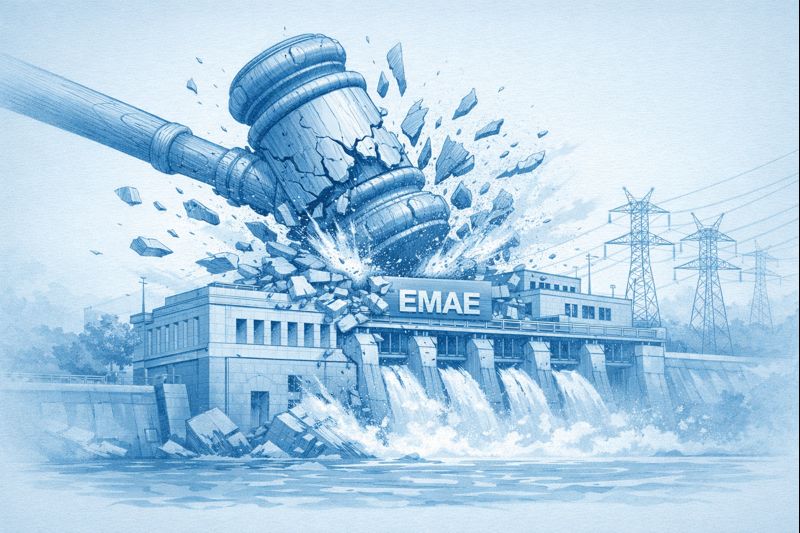
That distinction matters. The 2024 auction was presented as evidence of market agility and investor confidence, complete with emphatic gavel strikes at B3 and rhetoric about the state’s definitive exit from energy. Yet subsequent events showed how quickly such narratives can unravel when pricing rests less on fundamentals than on momentum.
As the Behind the Lines column revealed exclusively in November in , the buyer operated within a financial ecosystem that proved far more fragile and interconnected than publicly understood at the time of the sale. Phoenix was controlled by businessman Nelson Tanure and linked to the broader financial orbit of the Master group, led by banker Daniel Vorcaro. The subsequent collapse of that ecosystem triggered defaults, enforcement of collateral and, ultimately, a forced change in control. Parts of the episode later reached the courts, with asset freezes tied to investigations that remain under judicial review.
The result is an awkward paradox. EMAE moved from a private controller unable to meet its initial financial obligations to another private company that, until recently, had been state-owned itself — Sabesp, also privatized by the same administration that oversaw the original sale. Officially, São Paulo’s government frames the outcome as a technically sound integration of water and energy assets.
The lesson is structural rather than sensational. The problem was not merely price or timing. It was how buyer eligibility was defined and assessed — and how narrow the margin for error proved when a strategic asset was exposed simultaneously to a fragile controller and a stressed financial system. The discount captured by Sabesp reads less like opportunism than like the market’s invoice for a misjudged risk assessment.
In the end, the EMAE saga suggests that something went wrong in how buyer eligibility was assessed behind the scenes of São Paulo’s government — far from the B3 gavel, yet decisive in explaining why a strategic asset had to be privatized twice before landing with a viable owner.


Leave a Reply