

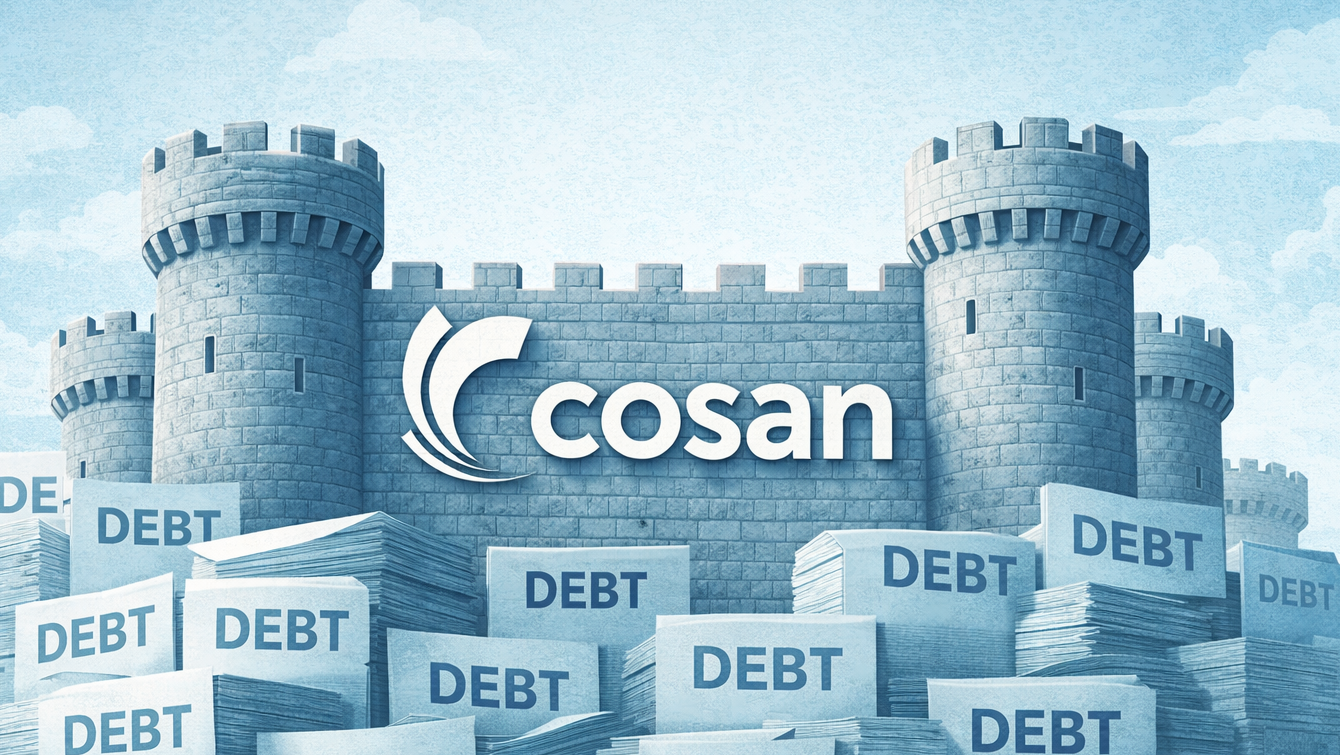
Cosan appears to be building a financial firewall around one of its most troubled assets.
The Brazilian infrastructure holding reported a R$5.8bn loss in the fourth quarter of 2025, largely driven by its stake in Raízen, the bioenergy and fuel distribution joint venture with Shell. The company ended the year with roughly R$55bn in net debt, making it one of the most leveraged energy platforms in Brazil.
But Cosan’s results point to something more strategic than a weak quarter. They suggest the group is reorganising its financial structure to prevent Raízen’s problems from spilling over into the rest of the conglomerate.
The first step was accounting. Cosan reduced the carrying value of its investment in Raízen to zero. Under equity accounting rules, losses are recognised until the investment is fully written down. Beyond that point, additional losses only flow through the parent’s accounts if it assumes legal or constructive obligations to support the subsidiary.
The practical effect is simple: once the investment is written down, further losses at Raízen no longer automatically hit Cosan’s earnings.
In other words, the write-down creates an accounting firewall.
The second step was financial. Cosan raised R$10.27bn in equity, bringing investors linked to BTG Pactual and Perfin alongside founder Rubens Ometto. The proceeds helped the company prepay about R$6.2bn of debt, cutting leverage at the holding level.
Chief executive Marcelo Martins has gone further still. The group’s long-term goal, he said on the earnings call, is to eliminate debt at the holding company altogether.
That would fundamentally change the group’s risk profile. A debt-free holding no longer depends on dividends from its subsidiaries to meet financial obligations. Financial stress in one asset becomes far less likely to threaten the stability of the entire structure.
Against that backdrop, Cosan’s decision not to inject fresh capital into Raízen takes on added significance. Preserving the parent company’s balance sheet appears to have taken priority over stabilising the joint venture.
None of this fixes Raízen. With tens of billions of reais in debt and a capital-intensive business exposed to volatile commodity cycles, the company will remain a key variable in Cosan’s investment story.
But after two decades spent assembling a sprawling industrial portfolio, Cosan now seems intent on ensuring that the troubles of one asset — even one as large as Raízen — do not define the fate of the entire group.
Update (10:02 p.m.): This column was written before Raízen’s filing for extrajudicial recovery.




Leave a Reply