
By Brazil Stock Guide – Lawmakers in the Minas Gerais state assembly approved on Wednesday (17) a bill authorizing the state government to move forward with the privatization of Companhia de Saneamento de Minas Gerais, or Copasa (CSMG3), the state-run water and sanitation utility.
The proposal, Bill 4,380/25, passed its second and final vote with 53 votes in favor and 18 against, surpassing the three-fifths supermajority required for approval. The measure now awaits sanction by Governor Romeu Zema of the Novo party.
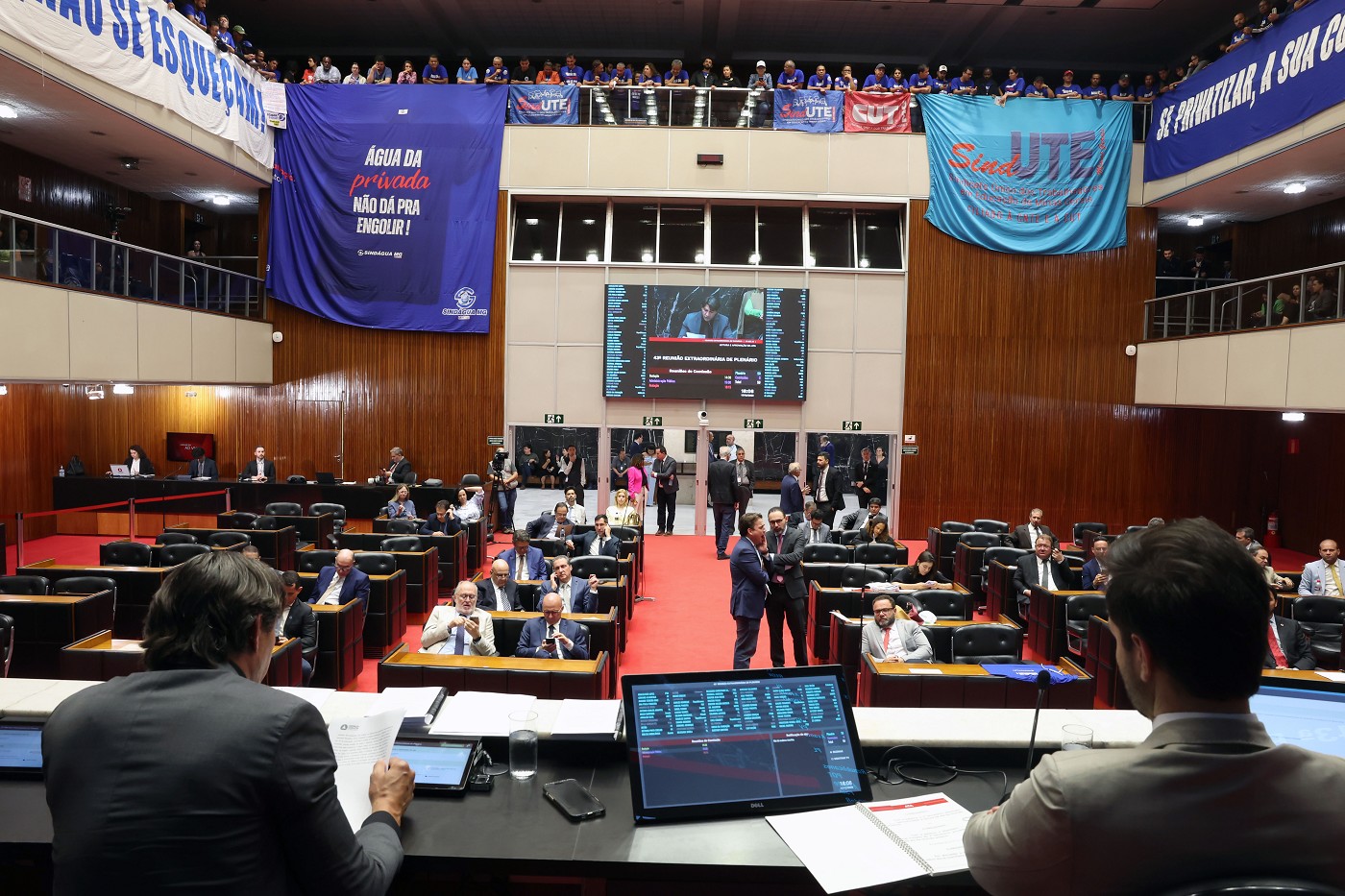
The session was devoted exclusively to the privatization agenda and unfolded amid strong resistance from opposition lawmakers and protesters. Demonstrators, many of them Copasa employees and union representatives, filled the assembly’s galleries and displayed banners criticizing the sale of the utility. Opposition legislators repeatedly sought the floor during the debate, which began around 10 a.m. and was broadcast online.
Pro-government lawmakers chose not to speak during the session, a tactical move aimed at speeding up proceedings and ensuring a swift vote. The strategy drew criticism from opponents, who argued that the debate was curtailed.
Under the approved framework, Minas Gerais will relinquish control of Copasa while retaining a so-called golden share, granting the state veto power over strategic decisions. The company is also expected to adopt a corporation-style governance model, designed to prevent any single shareholder from holding dominant control.
The bill allows privatization to occur either through a public auction or via a share offering in the capital markets. State officials have indicated a preference for a market-based share sale, following precedents set by other Brazilian sanitation companies.
Minas Gerais currently owns 50.3% of Copasa and plans to sell roughly 45% of the shares. The company is valued at about 16.7 billion reais on Brazil’s B3 exchange. In late November, Governor Zema said the state expects to raise “10 billion reais or more” from the transaction.
Zema has also stated that the sale is targeted for the first quarter of 2026, or no later than April or May, to avoid overlapping with Brazil’s electoral calendar. The governor has signaled plans to run for president, and allies see the privatization as a potential political asset.
The state government argues that privatization is necessary because both Copasa and its controlling shareholder lack the financial capacity to meet investment requirements set by Brazil’s sanitation legal framework, enacted in 2020. The law mandates universal access to water and sewage services nationwide by 2033.
Proceeds from the sale are expected to be used primarily to reduce Minas Gerais’ debt to the federal government or to meet obligations under the states’ debt repayment program. A portion of the funds may also be allocated to a basic sanitation fund.
Although privatization has been part of Zema’s agenda since his first term, momentum built only recently. In November, lawmakers approved a constitutional amendment removing the requirement for a public referendum to authorize the sale, following a contentious vote marked by protests.
As part of preparations for the transaction, Copasa reached an agreement with the city of Belo Horizonte—its largest customer—to extend its sanitation services contract from 2032 to 2073. The state expects other municipalities to follow suit, bolstering the company’s value ahead of privatization.
Copasa has also hired BTG Pactual, the law firm Stocche Forbes, and consultancy EY to evaluate and structure potential privatization models.
Read More: Pernambuco Awards R$ 19billion Sanitation Concessions to Pátria, Acciona-BRK




Leave a Reply